From Waste Heat to Profit: How a 22MW Turbine Unlocked Full Plant Capacity
Cement manufacturing generates heat that can be recovered for power generation. Through waste heat recovery, heat from the Preheater (PH) and Air Quenching Cooler (AQC) can be used to generate steam, which drives a turbine generator to produce captive power.
This helps plants make better use of available process energy, reduce dependence on grid power and lower energy costs. It can also reduce coal consumption and the associated CO₂ footprint.
From Waste Heat to Electricity
In cement plants, Steam Rankine Cycle (SRC) systems are widely used for WHR-based power generation. Steam generated from PH and AQC boilers is supplied to an injection condensing turbine.
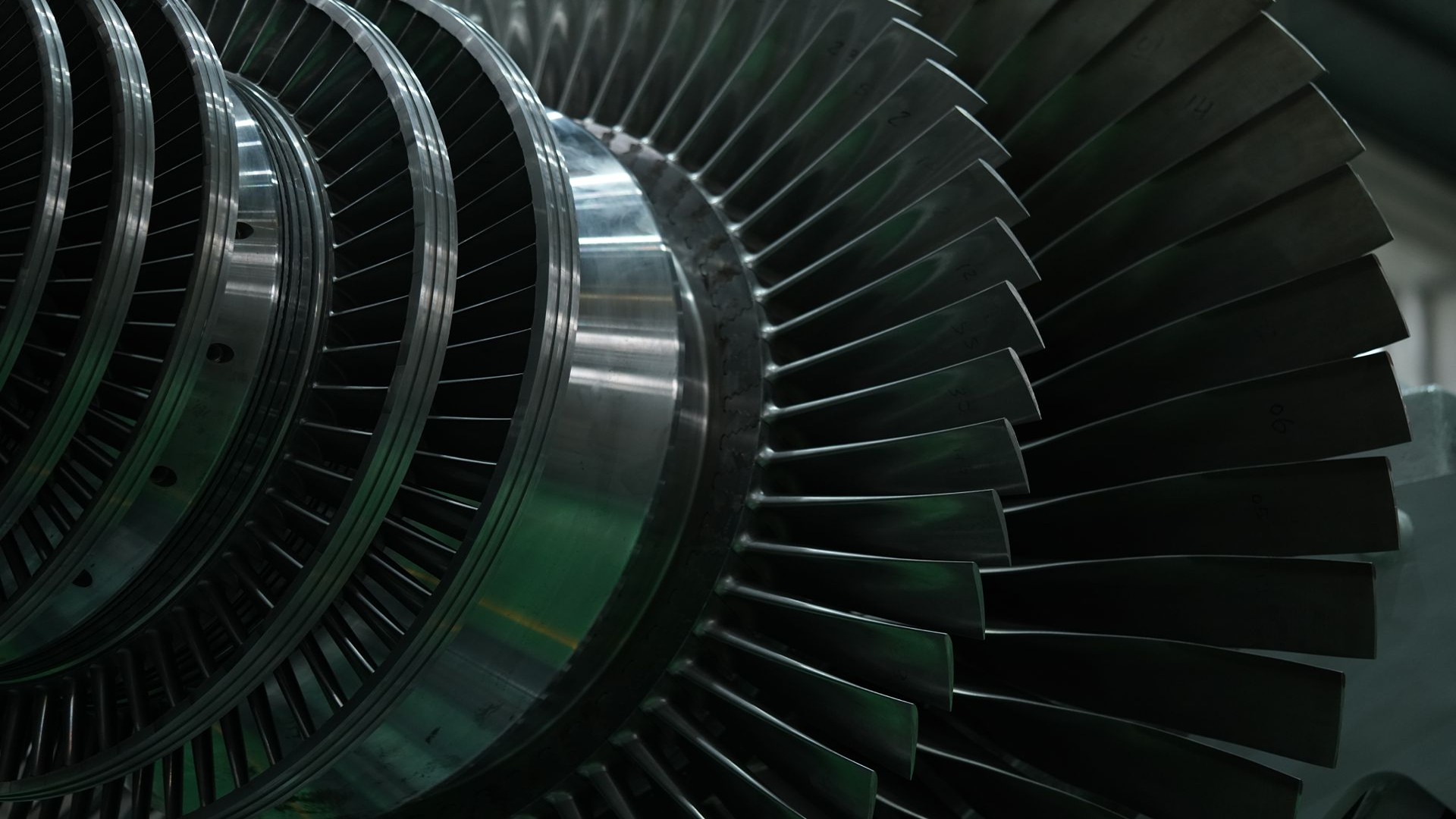
A waste heat recovery steam turbine converts the steam’s energy into electricity. Triveni Turbines offers injection, extraction, condensing and backpressure steam turbines for cement applications, configured to suit individual plant requirements.
The company also provides waste heat recovery steam turbine solutions across cement, steel and other industrial sectors.
The 22 MW Turbine Upgrade
A cement plant in Madhya Pradesh, India, had an existing 14 MW steam turbine generator that was not meeting its requirements efficiently. With additional cement capacity, the plant needed higher WHR power generation.
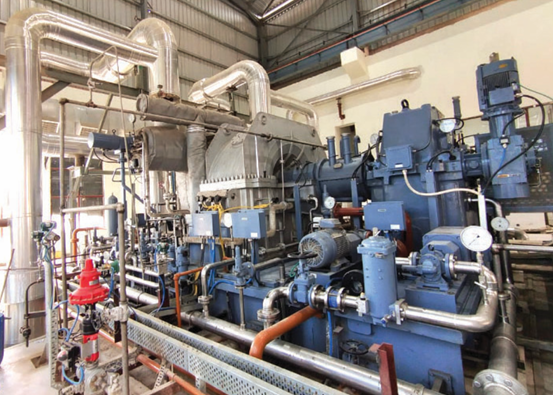
Triveni Turbines replaced the existing unit with a high-efficiency 22 MW steam turbine configured as an injection condensing turbine. The turbine was designed for high-pressure steam at 10.50 ata and 295°C, with medium-pressure injection steam at 2.0 ata and 190°C.
The replacement increased WHR power generation by 7 MW, enabling the 7 MTPA cement plant to operate at full capacity.
How the 22 MW Turbine Unlocked Full Plant Capacity
1. Increased power generation
Replacing the 14 MW unit with a 22 MW turbine increased WHR generation by 7 MW.
2. Converted recovered heat into power
Steam generated from PH and AQC heat was used for additional captive generation, demonstrating waste heat to electricity in practice.
3. Supported full production
The additional generation enabled the 7 MTPA plant to operate at full capacity.
4. Reduced energy costs and grid dependence
The 7 MW increase reduced the load on the captive power plant, resulting in lower energy costs and reduced coal requirements.
5. Reduced coal use and carbon footprint
The project reduced coal requirements and contributed to a decreased CO₂ footprint.
6. Retained existing infrastructure
The new STG was installed on the existing foundations and within the existing housing, using existing hardware components. Triveni Turbines’ in-house team handled dismantling, installation and commissioning.
From Power Generation to Plant Value
The project delivered additional WHR generation with minimal capital expenditure and lower operational expenditure, while indirectly reducing cement manufacturing input costs. It also contributed to improved plant returns and efficiency.
For industries evaluating a steam turbine for cement plant applications, factors such as available heat, steam parameters, boiler configuration and required power output are important considerations.
The project demonstrates how waste heat to electricity can support higher production capacity while improving energy utilisation and controlling power costs.
Reliability, Efficiency and Lifecycle Support
Triveni Turbines focuses on efficient and reliable turbine solutions designed to help customers maximise their return on investment. Its lifecycle support includes maintenance, troubleshooting, automation, upgrades, spares and refurbishment, backed by 24/7 customer support.
This lifecycle approach supports turbine performance and helps protect the value of the customer’s investment over its operating life.
Triveni Turbines for WHR
Triveni Turbines provides waste heat recovery solutions for cement, steel and other industrial applications. Its capabilities extend across engineering, manufacturing, installation, commissioning and aftermarket support. The company has installed more than 6,000 steam turbines across more than 80 countries.
The project demonstrates how a 22 MW steam turbine can increase WHR generation by 7 MW and enable a 7 MTPA cement plant to operate at full capacity.
For plants evaluating a steam turbine for cement plant WHR application, Triveni Turbines provides customised solutions based on plant-specific operating conditions.