Difference Between Impulse Turbine and Reaction Turbine: Working Principles and Engineering Applications
Turbines play a major role in power generation, marine systems, process plants, and industrial energy recovery. Their performance depends on how efficiently they convert steam energy into mechanical rotation.
Engineers usually classify steam turbines based on how steam pressure and velocity act on the moving blades. This classification helps in selecting the right turbine for pressure conditions, load demand, efficiency goals, and plant layout.
Among the main turbine types, impulse steam turbines and reaction steam turbines are widely studied because their working principles differ clearly. Let’s learn how impulse steam turbines and reaction steam turbines work, where they are used, and why their design differences matter.[Text Wrapping Break]
5 Key Differences Between Impulse Turbine and Reaction Turbine
The difference between an impulse turbine and a reaction turbine becomes clearer when we look at how steam moves through each system.
Impulse steam turbines and reaction steam turbines differ in the following ways:
- Energy Conversion
In an impulse turbine, steam expands completely in the nozzle before it reaches the moving blades. This expansion increases steam velocity, so the blades receive a fast-moving jet that creates rotational motion.
The moving blades mainly change the direction of the steam flow while converting kinetic energy into shaft power. In a reaction turbine, expansion continues through both fixed and moving blades, creating rotation through changes in pressure and steam acceleration.
- Blade Design
Impulse turbine blades are designed to guide high-speed steam smoothly after it leaves the nozzle. Since the main pressure drop occurs earlier, the moving blades primarily redirect the steam rather than expand it.
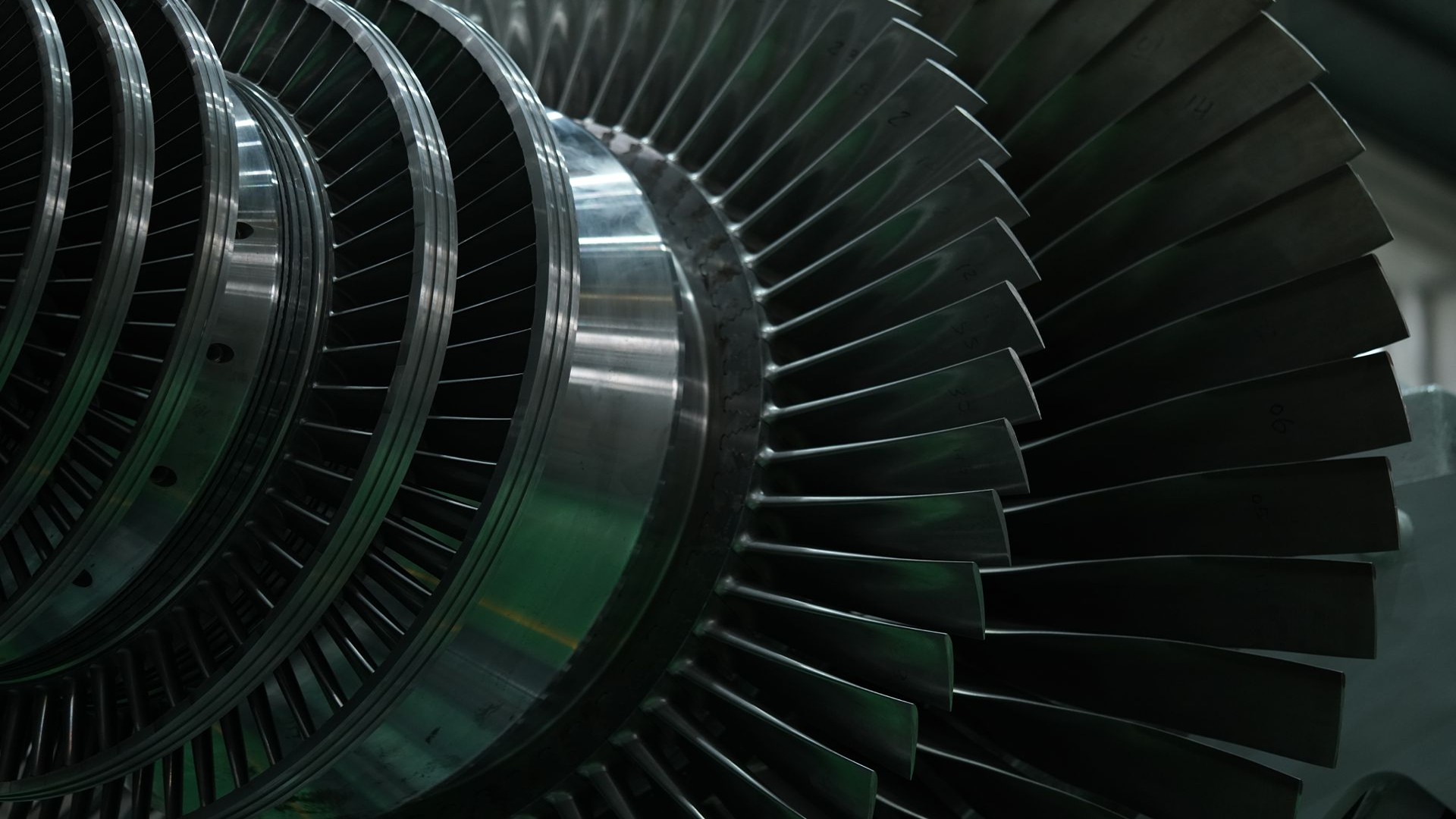
Reaction turbine blades have an airfoil-like shape because steam pressure varies as it passes through them. This design creates a pressure difference across the blade surface, which helps maintain continuous rotor movement.
- Staging Requirement
Impulse turbines can handle a larger pressure drop in fewer stages because steam expansion happens mainly in the nozzles. This makes the design suitable for high-pressure steam conditions and compact turbine arrangements.
Reaction turbines divide the pressure drop across several blade rows, which allows steam to expand gradually. This staged expansion can support smoother energy extraction, although the turbine may need a longer casing.
- Construction and Maintenance
Impulse turbines usually have simpler construction because the rotor blades do not handle a major pressure drop. This can make inspection, alignment, and maintenance easier in many industrial installations.
Reaction turbines require tighter sealing, precise blade clearances, and careful alignment because pressure changes occur across the moving blades. These details help control leakage losses and protect overall turbine efficiency.
- Engineering Applications
Impulse turbines are often used in small power units, pressure-reducing systems, and mechanical drives where high-pressure steam is available. Their design suits applications that need direct energy conversion and easier maintenance access.
Reaction turbines are commonly used in large thermal power plants with steady steam flow and high efficiency requirements. Many modern turbine systems combine both principles to extract energy across changing pressure and volume conditions.
Choose the Right Turbine With Confidence
The right turbine choice begins with understanding how steam behaves inside each design. Once engineers understand how impulse steam turbines and reaction steam turbines operate, they can match the turbine principle to pressure, load, efficiency goals, and maintenance needs.
This makes the selection process practical, precise, and application-focused. At Triveni Turbines, we design steam turbine solutions that support varied industrial and power-generation requirements with dependable engineering. Our approach focuses on performance, reliability, and long-term operational value.
By choosing the right turbine configuration, industries can improve energy use, support process continuity, and build systems that perform with greater confidence.