Biomass & Pulp/Paper: Powering the US Southeast With Renewable Steam Turbines
How biomass power plants generate electricity is a question gaining fresh relevance across the US Southeast, where dense forestry resources, a mature pulp and paper industry, and rising demand for renewable baseload power are converging. The region Georgia, Alabama, Mississippi, the Carolinas, Louisiana sits on one of the largest sustainable wood fiber baskets in the world. That combination of raw material and industrial infrastructure has made biomass-to-energy one of the most practical renewable power strategies in American manufacturing today.
At the center of it is a piece of equipment that’s been quietly converting heat into electricity for over a century: the steam turbine. Whether it’s wood waste from a sawmill, black liquor from a pulp digester, or agricultural residue, the underlying process is the same — burn or process the biomass to produce steam, then run that steam through a turbine to generate power. It’s not flashy technology, but it’s dependable, scalable, and increasingly central to how pulp and paper mills, biomass independent power producers (IPPs), and forestry-adjacent manufacturers keep their operations running.
This blog walks through how biomass power generation actually works, why pulp and paper mills lean so heavily on cogeneration, what black liquor recovery has to do with steam turbines, and what to look for in a biomass steam turbine manufacturer if you’re evaluating a project in the US.
How Biomass Power Plants Generate Electricity
At its core, a biomass power plant works the same way most thermal power plants do it just uses organic material instead of coal or gas as the fuel source. The basic sequence looks like this:
- Fuel preparation. Wood chips, bark, sawdust, agricultural residue, or other biomass is collected, sized, and dried to a usable moisture content.
- Combustion or gasification. The biomass is burned in a boiler (or, in some configurations, gasified first) to produce high-pressure, high-temperature steam.
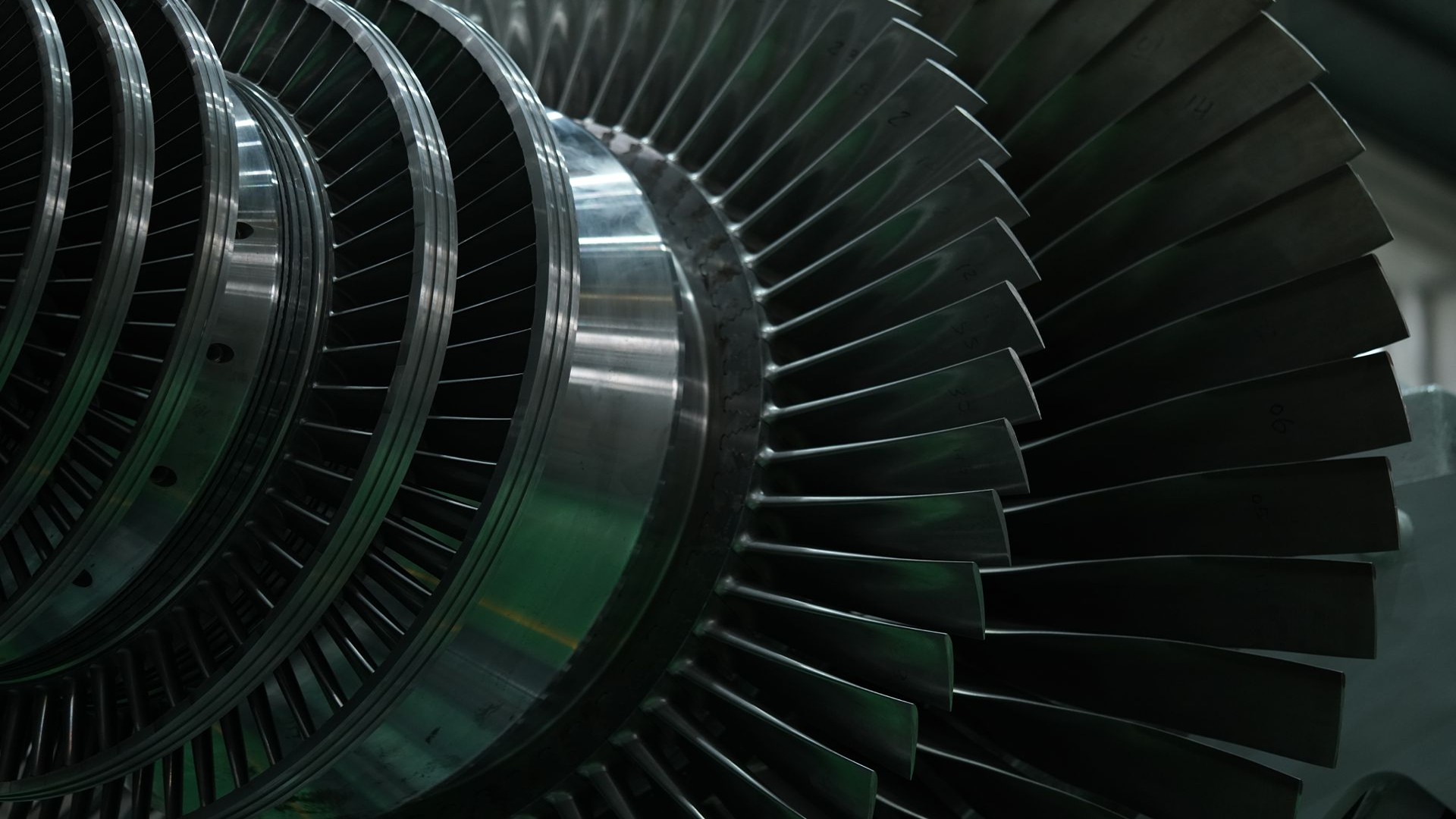
- Steam expansion through a turbine. That steam is directed through a steam turbine, where its thermal energy converts into mechanical rotational energy as it expands across the turbine blades.
- Electricity generation. The turbine shaft drives a generator, converting mechanical energy into electrical power that’s either used on-site or exported to the grid.
- Heat recovery (in cogeneration setups). In many industrial applications, steam that’s already passed through part of the turbine is extracted at a useful pressure and redirected for process heating, drying, or other plant needs rather than being fully expanded and lost.
That last step is what separates a simple biomass power plant from a biomass cogeneration facility, and it’s the model most pulp, paper, and forestry-based manufacturers actually use, because it gets far more value out of every ton of fuel burned.
Why Pulp and Paper Mills Are Natural Fits for Biomass Cogeneration
Biomass cogeneration for pulp and paper mills isn’t a new trend — it’s close to how the industry has operated for decades, and it’s becoming more sophisticated as mills look to cut fossil fuel dependence and stabilize energy costs.
A few reasons the fit is so strong:
- Built-in fuel supply. Pulp and paper operations generate enormous volumes of wood waste, bark, and process residue as a byproduct of their core manufacturing process. Instead of paying to dispose of it, mills burn it for energy.
- Simultaneous heat and power needs. Paper manufacturing requires large volumes of both steam (for drying and processing) and electricity (for mechanical equipment). A cogeneration steam turbine, particularly a backpressure configuration, can supply both from a single fuel source.
- Energy cost control. Market pulp and paper margins are sensitive to energy prices. Generating a significant share of a mill’s own power and steam reduces exposure to grid volatility.
- Sustainability and regulatory alignment. Biomass-based cogeneration counts toward renewable energy targets in many states and helps mills meet emissions and sustainability disclosure requirements without a full process overhaul.
- Waste stream utilization. Rather than landfilling bark and wood residue, mills convert it into usable energy, improving overall resource efficiency.
For a mid-sized pulp or paper facility, an on-site cogeneration plant sized in the 15-60 MW range is common, often supplying most or all of the site’s electrical and thermal load, with excess power sometimes sold back to the grid under a power purchase agreement.
Black Liquor Steam Turbine Cogeneration: A Closer Look
Black liquor is one of the more distinctive fuel sources in industrial cogeneration, and it’s specific to the kraft pulping process — the dominant method used in most US pulp mills.
Here’s how it works:
During kraft pulping, wood chips are cooked in a chemical solution to separate cellulose fibers (used to make paper) from lignin and other wood components. What’s left over is a thick, energy-dense byproduct called black liquor. Rather than treating it as waste, mills route it to a recovery boiler, where it serves two purposes at once:
- Chemical recovery. The inorganic cooking chemicals are recovered and recycled back into the pulping process, significantly reducing raw material costs.
- Energy generation. Burning the organic content of black liquor produces high-pressure steam, which then drives a steam turbine generator — often supplying a substantial share of the mill’s total energy needs.
This closed-loop design is one of the most efficient examples of industrial cogeneration in any manufacturing sector. It turns a process byproduct into both a chemical recycling stream and a major power source, using a single recovery boiler and turbine system. It’s also why so many US kraft pulp mills are, in effect, self-sufficient power producers — some generate more electricity than they consume and export the surplus to the grid.
The turbines used in these systems typically run in a backpressure configuration, since extracted steam is needed downstream for drying and process heat, though larger mills sometimes pair backpressure and condensing units to balance power and steam output across varying loads.
Wood Waste to Energy: Beyond the Mill
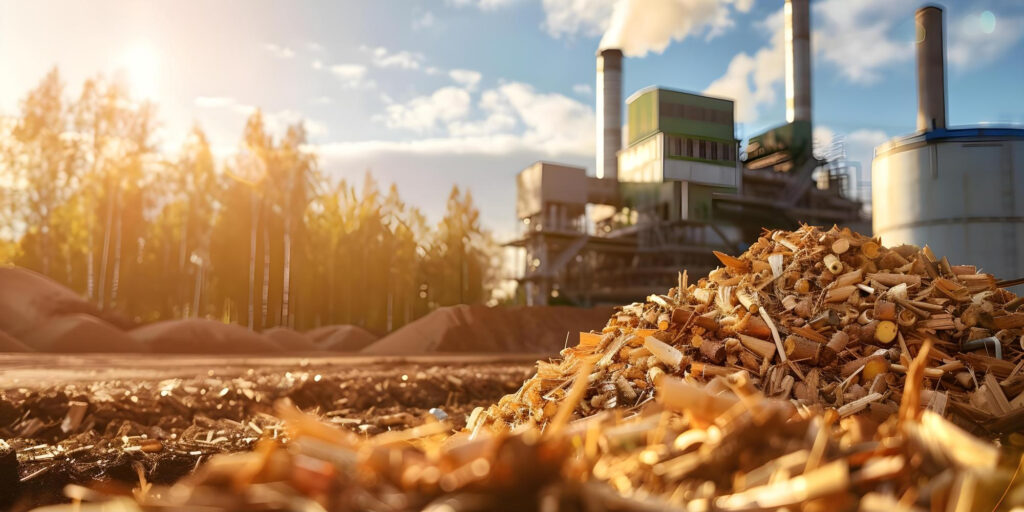
Not every biomass steam turbine project is tied to an operating pulp or paper mill. Across the Southeast, a growing number of standalone biomass IPPs and district energy projects run entirely on wood waste — sawmill residue, forestry thinnings, urban wood waste, and agricultural byproducts.
These projects typically fall into a few categories:
- Standalone biomass power plants, sized anywhere from a few MW to over 50 MW, selling electricity directly into the grid or under long-term offtake agreements.
- Combined heat and power (CHP) facilities serving industrial parks, university campuses, or district heating networks alongside electricity generation.
- Waste-to-energy conversions at facilities that previously landfilled wood or organic waste, now capturing that material as a fuel source instead.
For all of these, the core equipment decision comes down to the same question: what size and configuration of steam turbine matches the site’s fuel availability and power/heat demand? Custom-engineered industrial steam turbines — available in both backpressure and condensing types, scalable up to 100 MWe — are built specifically to be configured around a project’s specific fuel input and output requirements, rather than forcing a standardized unit onto a non-standard fuel source, which biomass often is.
What to Look for in Biomass Steam Turbine Manufacturers in the USA
If you’re evaluating a biomass cogeneration or waste-to-energy project in the US, the turbine supplier decision matters more than it might seem, because biomass fuel is inherently less consistent than natural gas or coal. A few criteria worth prioritizing:
1. Experience Across Fuel Variability
Biomass fuel quality varies by moisture content, ash content, and calorific value depending on the source. A manufacturer with proven experience across multiple biomass fuel types — wood waste, agricultural residue, black liquor, bagasse — will design turbines that handle that variability without unplanned downtime.
2. Customization Over Off-the-Shelf Units
Biomass and pulp/paper applications rarely fit a standard turbine spec. Look for manufacturers offering custom-engineered backpressure and condensing turbines tailored to your specific steam conditions, extraction requirements, and power output targets.
3. Aftermarket and Long-Term Service Support
A turbine is a 25-30 year asset. Ongoing efficiency, spare parts availability, and responsive maintenance support matter as much as the initial installation. Services like Triveni REFURB covering repair, overhauling, spares, and re-engineering of blade design and steam flow paths across turbine brands, not just original equipment are increasingly relevant for mills and IPPs running older installed turbines that need a reliability or efficiency boost rather than a full replacement.
4. Track Record Across Industries
Biomass and pulp/paper aren’t isolated sectors a manufacturer with broad experience across sugar, palm oil, municipal solid waste, and district heating applications brings cross-industry insight into fuel handling, steam cycle design, and operational best practices that a narrower specialist might not.
5. Global Support Infrastructure
For projects with tight uptime requirements, 24×7 technical support and a global service network reduce the risk of extended outages when something does go wrong.

The Economics: Why Biomass Cogeneration Still Makes Sense in 2026
Biomass cogeneration isn’t the cheapest power option on a pure per-kWh basis compared to natural gas, but the economics work differently for pulp, paper, and forestry-adjacent operations because of a few compounding factors:
- Fuel cost is near-zero when the biomass is a process byproduct (bark, black liquor, sawdust) that would otherwise need disposal.
- Avoided disposal costs offset a meaningful share of capital investment over the plant’s lifetime.
- Renewable energy credits and state-level incentives in several Southeastern states improve project returns for biomass IPPs selling power to the grid.
- Energy price stability reduces exposure to natural gas price swings, which matters for mills operating on thin margins.
- Long asset life — a well-maintained steam turbine can run for decades, spreading capital cost over a long operating horizon.
For a startup or business evaluating a new facility in the region, these are the numbers worth modeling before committing to a turbine size and configuration — because the right-sized system, matched correctly to available fuel and heat demand, is what determines whether the economics actually hold up.