API 612 Steam Turbines for US Refineries: Meeting the Toughest Standards
An API 612 steam turbine is built for one purpose: to keep running under conditions that would wear out ordinary industrial equipment. In US refineries and petrochemical plants, where a single unplanned shutdown can cost millions of dollars in lost production, the turbines driving critical compressors and pumps aren’t selected off a catalog — they’re engineered and certified against one of the most demanding standards in rotating equipment: API 612.
If you’re a business owner, project engineer, or startup evaluating turbine equipment for a refinery, gas processing plant, or petrochemical facility in the US, understanding what API 612 actually requires — and how it differs from the more general API 611 — is one of the most important early decisions in your procurement process. Get the standard wrong, and you either overspend on equipment your service isn’t demanding, or worse, underspend on equipment your service can’t tolerate failing.
This guide breaks down what API 612 covers, how it compares to API 611, what makes a turbine “special purpose,” and what to look for when sourcing a refinery-grade or petrochemical steam turbine.
What Is API 612?
API 612 is a standard published by the American Petroleum Institute that specifies the minimum design, materials, fabrication, inspection, testing, and shipping requirements for steam turbines used in special-purpose applications across the petroleum, petrochemical, and natural gas industries. It also covers the related lube oil systems, instrumentation, control systems, and auxiliary equipment that support the turbine in service.
In plain terms: API 612 exists for steam turbines driving equipment where failure isn’t an option compressors, pumps, and generators running continuously in critical process trains, often for years without a planned shutdown.
The standard has gone through several editions over the decades, with the current edition reflecting decades of accumulated field experience from refineries, EPC contractors, and turbine manufacturers working together to close gaps that caused real-world failures. That iterative, failure-informed development is part of why API 612 carries so much weight in refinery procurement specifications — it isn’t a theoretical document, it’s a compiled record of what actually goes wrong in critical service and how to design around it.
Alt Text: Natural gas processing facility with pipelines and compressor stations, industrial infrastructure, wide composition
API 611 vs API 612: What’s the Real Difference?
This is the question most engineers and procurement teams need answered first, because getting it wrong has real cost implications.
API 611: General-Purpose Steam Turbines
API 611 covers general-purpose steam turbines typically horizontal, single-stage or multi-stage units operating within defined limits on pressure, temperature, and speed. These turbines are built for less critical service: applications where a spare unit is readily available, where redundancy exists elsewhere in the process, or where the consequences of a shutdown are manageable.
API 612: Special-Purpose Steam Turbines
API 612 covers special-purpose turbines — the ones driving critical, often single-train equipment with no redundancy, where an unplanned outage directly halts production. These are typically higher-speed, multi-stage turbines built to tighter tolerances, with more rigorous testing, inspection, and documentation requirements throughout design and manufacturing.
Key Differences at a Glance
| Factor | API 611 (General-Purpose) | API 612 (Special-Purpose) |
| Typical application | Non-critical, redundant service | Critical, often single-train service |
| Design life expectations | Standard industrial design life | Extended continuous operation, typically with long uninterrupted run targets |
| Speed and load range | Defined, moderate limits | Higher speeds, tighter tolerances |
| Testing and inspection | Standard shop testing | More extensive mechanical running tests, documentation, and quality checks |
| Sealing and rotor dynamics | Standard requirements | Stricter shaft sealing, vibration, and rotor dynamics criteria |
| Cost | Lower | Higher, reflecting the engineering and testing rigor |
The practical takeaway: if your turbine is driving a critical compressor or pump train in a refinery process unit with no backup, API 612 is almost certainly the correct specification — even if it costs more upfront. The cost of an unplanned outage on a critical train typically dwarfs the price difference between the two standards.
Why Refineries Specify API 612 Steam Turbines
A refinery steam turbine driving a process compressor isn’t just spinning a shaft — it’s often the single point of failure for an entire process unit. A few reasons refineries and petrochemical plants insist on API 612 compliance for this equipment:
- Continuous, uninterrupted operation. Many refinery process trains are designed to run for years between planned turnarounds. The turbine has to match that duty cycle without unplanned intervention.
- No built-in redundancy on critical trains. Unlike some balance-of-plant equipment, critical compressor and pump drivers often don’t have a backup unit standing by. If the turbine fails, the unit stops.
- Harsh and variable steam conditions. Refinery steam systems can involve varying pressure, temperature, and purity conditions depending on the process unit and steam header configuration — conditions API 612 turbines are specifically engineered to tolerate.
- Safety and regulatory exposure. A turbine failure in a petrochemical or refinery environment isn’t just a production loss — it can create safety incidents, environmental exposure, and regulatory scrutiny that far outweigh the equipment cost difference.
- Insurance and risk management requirements. Many refinery insurers and risk assessments effectively require API 612-compliant equipment for critical rotating machinery, given the standard’s track record.
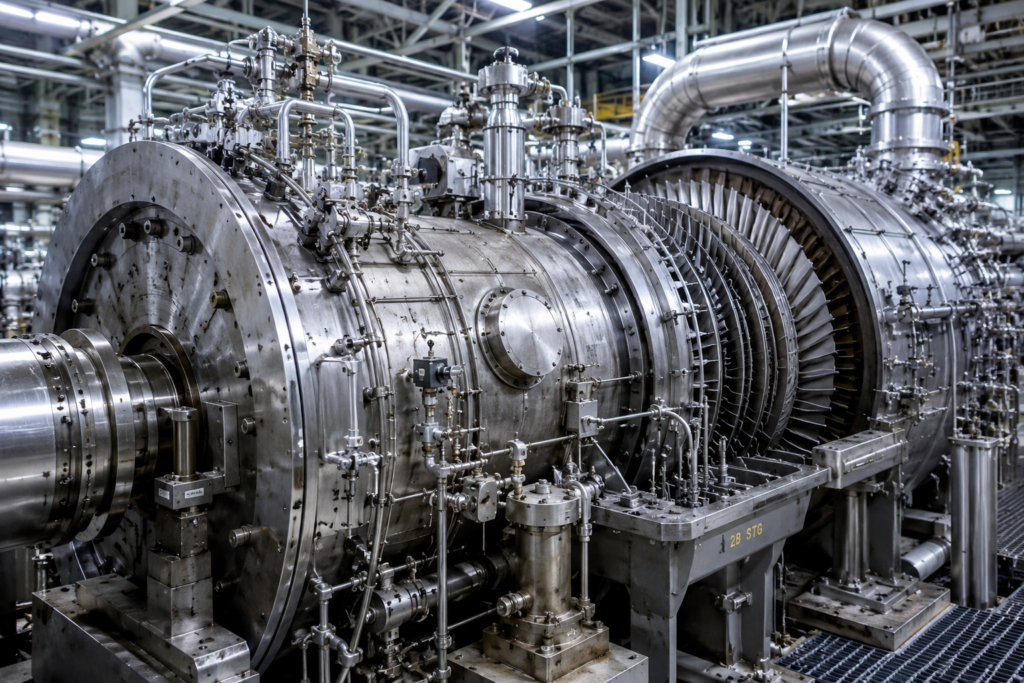
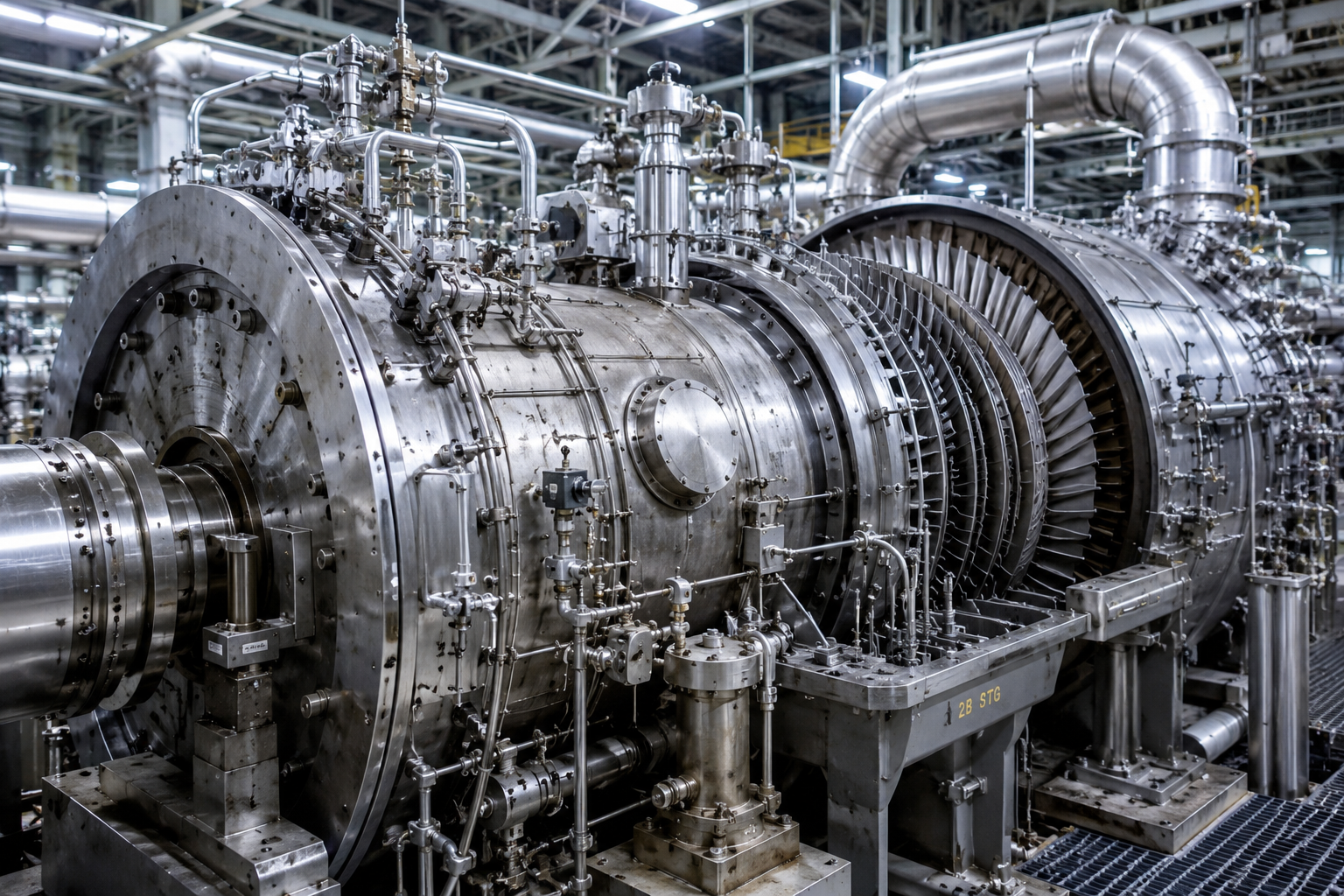
Alt Text: Close-up of an industrial steam turbine and compressor train, metallic casing and piping, precision engineering detail
What Makes a Steam Turbine “Special Purpose”?
The term special purpose steam turbine gets used loosely, but under API 612 it has specific engineering implications. A special-purpose turbine typically features:
Higher Rotational Speeds
Special-purpose turbines often run at significantly higher speeds than general-purpose units, particularly when directly driving high-speed compressors without a gearbox, or when gearbox ratios require higher turbine input speeds.
Tighter Rotor Dynamics and Vibration Control
Because these turbines often run continuously for years, rotor dynamics — balance, critical speeds, vibration limits — are held to stricter tolerances than general-purpose equipment, reducing the risk of fatigue-related failures over extended run times.
Advanced Shaft Sealing Systems
Special-purpose turbines typically use more sophisticated shaft sealing arrangements to prevent steam leakage and contamination, particularly important where the turbine is located near other process equipment handling hydrocarbons.
Extensive Mechanical Testing
Before shipment, API 612 turbines typically undergo more rigorous mechanical running tests verifying vibration levels, bearing performance, and governor/control response under simulated operating conditions compared to general-purpose equipment.
Robust Control and Protection Systems
Given the criticality of the driven equipment, special-purpose turbines are paired with more comprehensive instrumentation, overspeed protection, and control systems designed to detect and respond to abnormal conditions before they cause damage.
Petrochemical Steam Turbine Applications Beyond Refining
While refineries are the most visible application, petrochemical steam turbines built to API 612 standards show up across a wider set of critical process applications:
- Compressor drivers for ethylene, propylene, ammonia, and other petrochemical process compressors
- Pump drivers for critical boiler feedwater, process fluid, or cooling water systems where continuous flow is essential
- Generator drivers in cogeneration setups supplying power to critical plant loads
- Gas processing plant equipment, where turbines drive compressors handling natural gas or associated process gases
Across chemicals, fertilizers, and oil & gas processing broadly, the same underlying logic applies: where a shutdown carries outsized cost or safety risk, API 612 becomes the default specification rather than an option to consider.
Alt text: Petrochemical plant exterior with storage tanks and processing units, industrial skyline, daytime shot
Sourcing an API 612 Steam Turbine: What to Evaluate
If you’re a business owner or startup evaluating turbine suppliers for a refinery or petrochemical project, a few factors matter beyond the base API 612 checklist:
1. Custom Engineering Capability
API 612 applications are rarely standardized — steam conditions, speed requirements, and driven equipment vary by project. Look for manufacturers offering industrial steam turbines custom-engineered to your specific process conditions, rather than adapting a fixed catalog unit to fit.
2. Proven Track Record Across Critical Industries
A supplier with documented experience across refineries, petrochemicals, fertilizers, and oil & gas — not just power generation — brings relevant field insight into the exact failure modes API 612 is designed to prevent.
3. Long-Term Service and Aftermarket Support
An API 612 turbine is a multi-decade asset supporting a critical process. Ongoing maintenance, spare parts availability, and rapid technical response matter as much as the initial build quality. Aftermarket programs like Triveni REFURB — covering repair, overhauling, spares, and re-engineering of blade design and steam flow paths across turbine brands, not just original equipment — become particularly valuable for plants managing aging critical-service turbines that need reliability restoration without a full replacement cycle.
4. Testing and Documentation Transparency
Given the stakes of critical-service equipment, insist on full visibility into mechanical running test results, quality documentation, and inspection records before acceptance — not just a certificate of compliance.
5. Global Support Infrastructure
For plants running 24×7, having access to responsive technical support and a global service network reduces the risk of extended downtime if an issue does arise post-commissioning.
Alt Text: Engineer in hard hat and safety gear inspecting rotating machinery inside an industrial plant, hands-on technical inspection
Cost Considerations: Is API 612 Worth the Premium?
API 612 turbines cost more than API 611 equivalents — often meaningfully more, given the additional engineering, testing, and documentation involved. For a startup or business evaluating capital budgets, the question isn’t whether API 612 is more expensive; it’s whether the application actually requires it.
A practical framework:
- If the turbine drives a single-train, non-redundant critical process compressor or pump – API 612 is almost always the right call, regardless of upfront cost.
- If the turbine serves balance-of-plant or redundant equipment where a shutdown is manageable – API 611 may be entirely appropriate and more cost-effective.
- When in doubt, model the cost of an unplanned outage – lost production, potential safety exposure, regulatory risk against the price difference between the two standards. In most refinery-critical applications, that comparison settles the decision quickly.